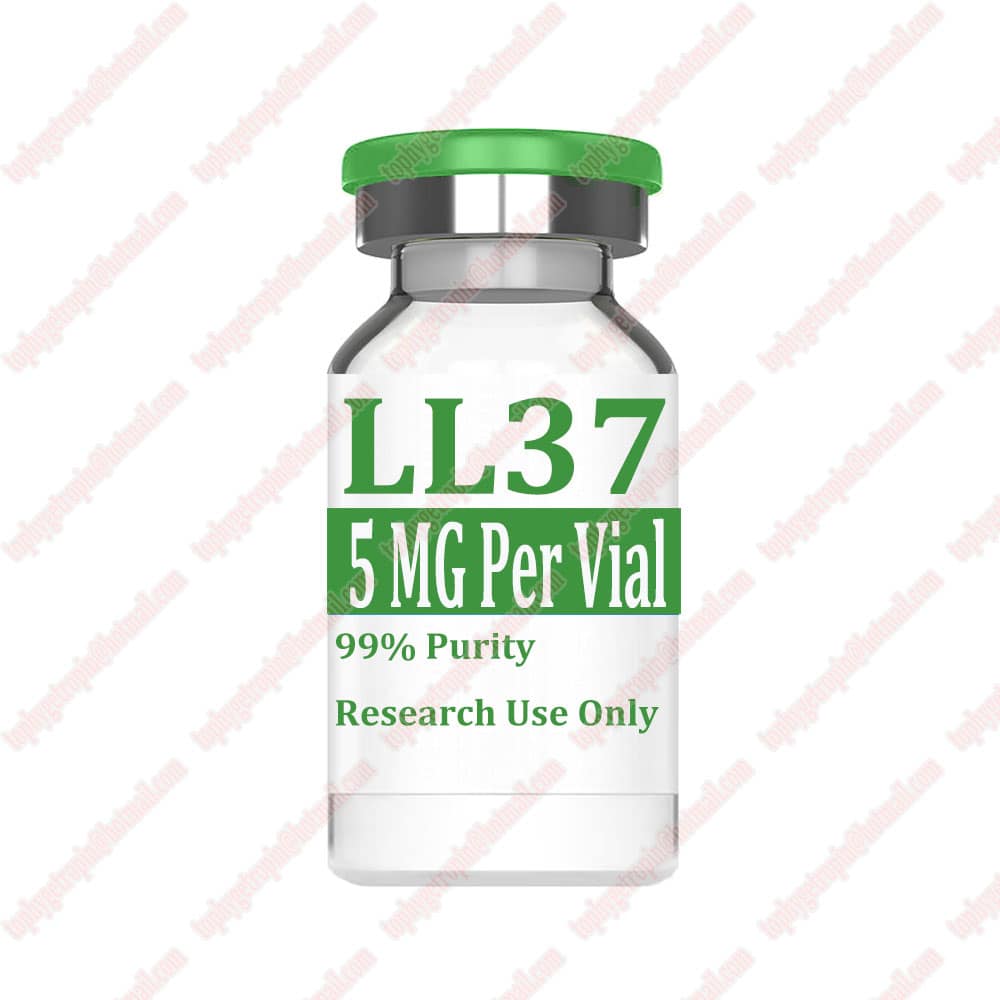
LL37 5mg 10 Vials
Original price was: $160.00.$120.00Current price is: $120.00.
Compare LL37 cathelicidin peptide with conventional antibiotics. Professional analysis of antimicrobial effectiveness, resistance, and safety.
Free shipping on orders over $1500! 100% delivery
- Satisfaction Guaranteed
- No Hassle Refunds
- Secure Payments
Description
This comprehensive analysis examines LL37 peptide’s unique position in antimicrobial therapy, comparing its mechanisms, effectiveness, and applications with conventional antibiotics and other antimicrobial approaches. Understanding these distinctions helps healthcare providers and patients make informed decisions about optimal antimicrobial strategies for various infectious conditions.
What is LL37 Peptide?
LL37 represents a significant class of antimicrobial compounds as the human body’s natural cathelicidin antimicrobial peptide. Unlike synthetic antibiotics that target specific bacterial mechanisms, LL37 employs multiple biological pathways to eliminate pathogens while simultaneously enhancing immune function and supporting tissue repair. This 37-amino acid peptide combines direct antimicrobial action with immune modulation, making it uniquely effective against resistant pathogens while promoting overall health and healing.
LL37 Peptide Benefits and Effects
| Antimicrobial Category | LL37 Mechanism | Clinical Advantage |
|---|---|---|
| Bacterial Elimination | Multi-target membrane disruption | Effective against resistant strains |
| Viral Inactivation | Envelope disruption and immune enhancement | Broad-spectrum antiviral activity |
| Fungal Control | Membrane permeabilization | Effective antifungal properties |
| Biofilm Disruption | Physical and enzymatic breakdown | Overcomes biofilm protection |
| Immune Enhancement | Immune cell activation and recruitment | Coordinated host defense response |
| Tissue Healing | Angiogenesis and re-epithelialization | Dual antimicrobial and healing action |
| Endotoxin Neutralization | Direct binding and inactivation | Reduced inflammatory complications |
| Resistance Prevention | Multiple simultaneous targets | Minimal resistance development |
LL37 Peptide Side Effects and Safety
| Safety Parameter | LL37 Profile | Conventional Antibiotics |
|---|---|---|
| Overall Tolerance | Excellent due to natural origin | Variable, often significant side effects |
| Microbiome Impact | Preserves beneficial bacteria | Often disrupts normal flora |
| Resistance Development | Extremely rare | Common and increasing |
| Allergic Reactions | Minimal due to human origin | Common, can be severe |
| Organ Toxicity | No significant organ toxicity | Kidney, liver, hearing damage possible |
| Drug Interactions | Minimal interactions | Numerous significant interactions |
| Long-term Use | Generally safe with monitoring | Often limited by cumulative toxicity |
| Immune System | Enhances immune function | May suppress or not affect immunity |
Main LL37 Peptide Use Cases
| Clinical Application | LL37 Advantages | Optimal Scenarios |
|---|---|---|
| Antibiotic-Resistant Infections | Multi-target action overcomes resistance | MRSA, VRE, carbapenem-resistant bacteria |
| Chronic Wound Infections | Dual antimicrobial and healing effects | Diabetic ulcers, non-healing wounds |
| Biofilm-Associated Infections | Biofilm disruption capabilities | Catheter infections, chronic sinusitis |
| Immunocompromised Patients | Immune enhancement plus antimicrobial action | Cancer patients, HIV, organ transplant |
| Respiratory Infections | Local application with systemic benefits | Pneumonia, bronchitis, CF lung infections |
| Surgical Site Infections | Prevention and treatment with healing support | Post-operative infection control |
| Fungal Infections | Broad antifungal activity | Candida, Aspergillus, dermatophytes |
| Viral Infection Support | Antiviral activity plus immune enhancement | Herpes, respiratory viruses, COVID-19 |
LL37 Peptide Dosage Guidelines
| Infection Type | LL37 Dosing | Duration | Administration |
|---|---|---|---|
| Mild Bacterial Infections | 2-5mg daily | 7-10 days | Subcutaneous or topical |
| Severe Bacterial Infections | 5-15mg daily | 10-14 days | Subcutaneous, medical supervision |
| Fungal Infections | 3-8mg daily | 2-8 weeks | Topical and/or systemic |
| Viral Support | 3-6mg daily | 5-10 days | Subcutaneous or nebulized |
| Wound Infections | 2-6mg daily | Until healing complete | Local injection or topical |
| Preventive Use | 1-3mg daily | Variable | Subcutaneous |
| Biofilm Infections | 5-10mg daily | 2-6 weeks | Local high-concentration application |
| Immune Support | 2-4mg, 3x weekly | Ongoing | Subcutaneous |
LL37 Peptide Cycle Guidelines
LL37 cycling protocols differ significantly from antibiotic regimens due to its natural origin and resistance to pathogen adaptation. Acute infections typically require 7-14 days of daily administration, with treatment continuing until clinical resolution plus 2-3 additional days. Chronic infections may require 4-12 weeks of treatment with possible maintenance protocols. Unlike antibiotics, LL37 can be used long-term for immune support without significant risk of resistance development or organ toxicity. Preventive cycles during high-risk periods typically last 2-6 weeks, while maintenance protocols for immunocompromised patients can continue indefinitely with appropriate monitoring.
LL37 Peptide Administration Guide
LL37 offers multiple administration routes not available with most antibiotics, allowing for targeted therapy based on infection location and patient needs. Subcutaneous injection provides systemic antimicrobial effects with excellent bioavailability, while topical application allows for high local concentrations without systemic exposure. Nebulization delivers LL37 directly to respiratory tissues for lung infections, and local injection near wounds or infected tissues provides concentrated antimicrobial action. This flexibility allows for personalized treatment approaches that optimize efficacy while minimizing systemic exposure when appropriate.
LL37 Peptide Treatment Duration
Treatment duration with LL37 is determined by clinical response rather than arbitrary time limits, as there’s no risk of developing resistance or cumulative toxicity. Bacterial infections typically resolve within 7-14 days, while fungal infections may require 2-8 weeks. Chronic wounds are treated until complete healing occurs, which may take several weeks to months. Viral infections benefit from 5-10 days of support during the acute phase. Immunocompromised patients may require ongoing maintenance therapy, which is safe due to LL37’s natural origin and immune-enhancing properties.
LL37 Peptide Storage Instructions
LL37 storage requirements are similar to other peptide therapeutics but critical for maintaining antimicrobial activity. Lyophilized powder remains stable for 2+ years when stored at -20??C in sealed, desiccated conditions. Reconstituted solutions should be stored at 2-8??C and used within 2-4 weeks, though shorter timeframes are preferable for maintaining maximum potency. Sterile handling throughout storage and preparation is essential to prevent contamination and preserve the antimicrobial integrity of the peptide. Light protection and temperature consistency help maintain optimal therapeutic effectiveness.
Why Choose LL37 Peptide for Modern Antimicrobial Therapy?
LL37 addresses the critical limitations of conventional antibiotic therapy by providing broad-spectrum antimicrobial activity without promoting resistance development. Its multi-target mechanism makes pathogen adaptation extremely difficult, while its natural human origin ensures excellent biocompatibility and minimal side effects. Unlike antibiotics that often disrupt beneficial microorganisms, LL37 selectively targets pathogens while supporting immune function and tissue healing. This combination of safety, efficacy, and resistance to adaptation makes LL37 ideal for the current era of increasing antibiotic resistance and need for sustainable antimicrobial solutions.
Summary
LL37 peptide represents the future of antimicrobial therapy, combining the broad-spectrum efficacy needed for modern infections with the safety and sustainability required for long-term use. Its unique mechanisms, resistance to pathogen adaptation, and immune-enhancing properties provide advantages that conventional antibiotics cannot match. Whether used for resistant infections, chronic conditions, or preventive care, LL37 offers a comprehensive approach to antimicrobial therapy that addresses current healthcare challenges while supporting overall health and healing.
LL37 Peptide FAQ
Q: How does LL37 compare to antibiotics for treating resistant bacteria?
A: LL37 is often more effective against resistant bacteria because it uses multiple mechanisms simultaneously, making it nearly impossible for pathogens to develop resistance.
Q: Can LL37 replace antibiotics entirely?
A: While LL37 shows promise for many applications, it should complement rather than completely replace antibiotics, especially for severe infections requiring immediate intervention.
Q: Does LL37 disrupt normal bacterial flora like antibiotics do?
A: No, LL37 preferentially targets pathogenic organisms while generally preserving beneficial bacterial populations, unlike broad-spectrum antibiotics.
Q: Is LL37 safe for long-term use unlike many antibiotics?
A: Yes, LL37’s natural origin and lack of organ toxicity make it much safer for extended use compared to most conventional antibiotics.
Q: How does LL37 prevent the development of antimicrobial resistance?
A: LL37’s multiple simultaneous mechanisms of action make it extremely difficult for pathogens to develop resistance, unlike single-target antibiotics.
You must be logged in to post a review.
Related products
-
Sale!
Melanotan II MT-2 Acetate 10mg * 10 Vials * 1 kit
Original price was: $100.00.$80.00Current price is: $80.00. -
Sale!
TB500 Thymosin B4 Acetate 5MG*10Vials*1Kits-Best Eeffect And Reviews Top Purity Peptides Product
Original price was: $150.00.$115.00Current price is: $115.00. -
Sale!
DSIP 5mg * 10Vials * 1kits-Best Eeffect Hiqh Purity Peptides Product
Original price was: $110.00.$80.00Current price is: $80.00. -
Sale!
Ipamorelin 5mg*10Vial*1kits-Best Eeffect Hiqh Purity Peptides Product
Original price was: $100.00.$70.00Current price is: $70.00.
Reviews
There are no reviews yet.